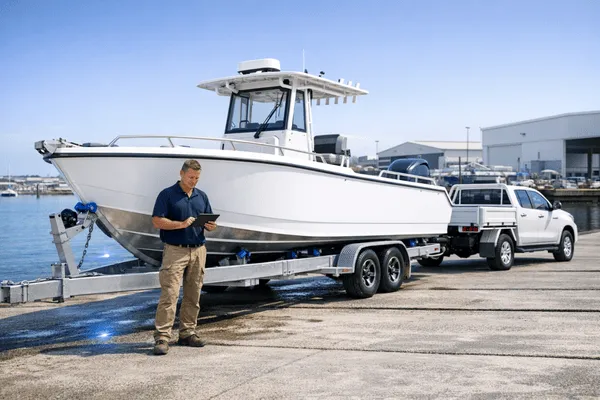
Marine Finance Australia – Complete Guide for ABN Holders (Boats & Jet Skis)
For many Australian businesses, a boat or jet ski is not a leisure purchase — it’s a working asset that allows the business to operate and generate income.
Commercial fishing operators, marine contractors, tourism operators, water-based service providers and coastal trades all rely on marine vessels as part of their day-to-day operations. Because of this, lenders assess marine finance for ABN holders very differently to personal boat loans. Approval is usually based on your business activity and recent bank statements rather than payslips.
This complete guide explains how marine finance works in Australia, what lenders look for when assessing boats and jet skis used for business, how repayments are structured, and how many operators secure approval within 24–48 hours when the application is prepared properly.
Who This Guide Is For
This guide applies to businesses using marine vessels for work, including:
Commercial fishing operators
Marine construction and maintenance businesses
Coastal and waterfront trades
Tourism and charter operators
Jet ski hire and water-sport operators
Businesses operating in remote or island locations
Any ABN holder using a boat or jet ski as part of their work
If the vessel is used to generate income, the lending approach is commercial.
Why Marine Finance Is Assessed Differently
Lenders understand that a work boat or jet ski is not discretionary. It is directly tied to how the business earns.
Because of this, marine assets are assessed under commercial asset finance rules. The focus is on:
Is the business genuinely trading?
Does the vessel clearly support income?
Are repayments affordable based on real cash flow?
Is the asset sensible, verifiable, and suited to the work?
When those are clear, approvals are often simpler than people expect.
Types of Marine Assets Commonly Financed
Lenders are comfortable with a wide range of commercial marine assets:
Work boats
Aluminium boats, fibreglass boats, centre consoles, runabouts, work punts and commercial hulls used for fishing, transport, maintenance and service work.
Charter and tourism vessels
Boats used for tours, fishing charters, transport, and water-based experiences.
Jet skis
Commonly used for hire businesses, marine access work, patrol work and water-sport operations.
Trailers and fit-outs
Boat trailers, safety equipment, navigation gear, and fit-outs that are clearly part of the vessel’s working setup.
What Lenders Look For
ABN and trading activity
An active ABN and visible income from marine-related or associated work.
Bank statements
Recent statements showing consistent deposits and reasonable account conduct.
The vessel itself
Age, type, condition, and whether it clearly fits the business activity.
Experience
Industry experience operating in marine, fishing, tourism or service work.
How Marine Loan Repayments Are Structured
Marine finance is typically structured over several years, often with a balloon payment to keep repayments manageable while the vessel is generating income.
This allows the business to preserve working capital for fuel, maintenance, safety compliance and operating costs.
New vs Used Boats and Jet Skis
Both are commonly financed.
Used marine assets are very normal, provided they are well documented and suited to the work. The clarity of the purchase matters more than whether it is new or used.
Dealer vs Private Sale
Dealer purchases are often faster because documentation is clear.
Private sales are possible but rely on clear vessel details, ownership clarity, and good documentation.
Is Zero Deposit Marine Finance Possible?
Often yes.
When trading activity is clear and the vessel is sensible for the work, lenders are often comfortable funding the full purchase price.
Low Doc Marine Finance
Many marine applications are assessed using bank statements and ABN details rather than full financials, particularly for operators with strong recent trading activity.
Real-World Scenarios
A fishing operator upgrading to a larger boat for extended trips
A charter business adding another vessel for peak season demand
A marine contractor purchasing a work boat for coastal access jobs
A jet ski hire operator expanding fleet size
These are common, comfortable scenarios for lenders.
Common Mistakes That Delay Approvals
Incomplete bank statements
Unclear vessel details
Committing to purchase before finance clarity
Buying vessels outside normal guidelines without checking first
Preparing for Fast Approval
Have ready:
Licence
ABN/GST details
Recent bank statements
Boat/jet ski invoice or details
FAQs
Can I get boat finance under my ABN instead of a personal loan?
Yes. If the boat is used for business purposes, lenders assess the application as commercial asset finance rather than a personal boat loan. This means the focus is on your business activity and bank statements, not payslips or personal borrowing capacity.
Is marine finance available for used boats and jet skis?
Yes. Used marine assets are very common in commercial lending. The key factors are the age, condition, and how clearly the vessel details are documented. A well-presented used boat or jet ski is often just as straightforward to finance as a new one.
Can I finance a boat or jet ski from a private seller?
Often yes. Private sales are possible, but lenders require clear ownership details, vessel information, and a properly documented purchase agreement. Dealer purchases are usually faster simply because the paperwork is more standardised and easier to verify.
Do I need financial statements or tax returns for marine finance?
Not always. Many marine finance applications for ABN holders are assessed using recent bank statements and basic business information. This is often referred to as low doc lending and is common where trading activity is clearly visible.
Is zero deposit marine finance possible?
Often yes. When the vessel clearly supports your business activity and your bank statements show consistent income, lenders may fund the full purchase price. Deposits are more likely when the ABN is very new or the asset sits outside normal lending guidelines. For more see our resource zero deposit boat finance.
Can I include the boat trailer, safety gear and navigation equipment in the finance?
Often yes. Items that are clearly part of the vessel’s working setup — such as trailers, safety equipment, and marine electronics — can usually be included when they are listed clearly on the purchase invoice.
How long can marine finance terms run for?
Marine finance terms commonly run between 3 and 7 years, depending on the age and type of vessel. Many operators choose a structure with a balloon payment to keep repayments manageable while the boat is generating income.
Can I get approval before I commit to buying the boat or jet ski?
Yes — and this is often the smartest approach. Having your ABN, bank statements and borrowing range assessed before committing to a purchase allows you to shop confidently and avoids delays if the vessel or price falls outside lender guidelines.
Final Thoughts
Marine vessels used for business are income-producing assets, and marine finance is designed to support that reality. When the application is clear and the vessel fits the work, approvals are often faster and more flexible than operators expect.
For more details on commercial boat finance see what lenders check